Necrotic Ring Spot in Lawns
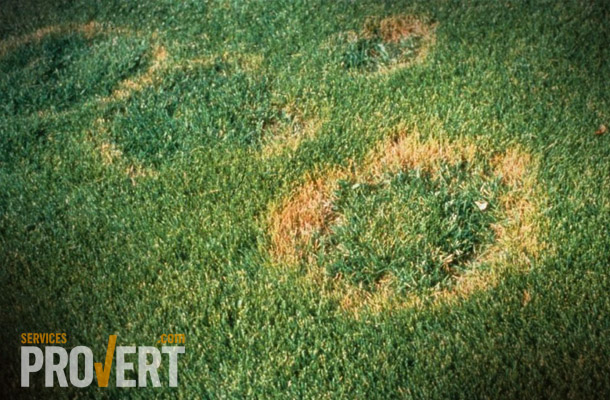
Necrotic ring spot is a lawn disease caused by a soil-borne fungus. It typically appears in the spring, when environmental conditions favor fungal development, particularly when temperatures range between 10 and 20 °C (50-68 °F) and when the soil experiences excess moisture or periods of drought stress.
This disease is characterized by the appearance of circular patches of dead grass measuring approximately 10 to 25 cm (4 to 10 inches) in diameter. A typical symptom is the presence of a tuft of green grass in the center of the ring, creating a distinctive donut-like pattern. As the infection progresses, multiple rings may merge together to form larger areas of damaged turf.
Necrotic ring spot usually affects lawns that are weakened by poor soil conditions or improper lawn care practices.
Several cultural practices can help reduce the severity of this disease:
- Avoid excessive fertilization, particularly with nitrogen.
- Maintain a higher mowing height, which helps the grass tolerate stress.
- Dethatch the lawn when necessary to reduce excessive organic buildup.
- Aerate compacted soil to improve air, water, and nutrient movement.
- Avoid excessive irrigation, especially during hot and dry periods.
A balanced lawn care program - including proper fertilization, soil aeration, and appropriate watering practices - helps strengthen the natural resistance of turfgrass against diseases such as necrotic ring spot.